
斯巴达克斯第三季Taiwan regional travelers with so-called ‘passports’ denied entry to Uganda; mainland expert says separatist pursuits keep narrowing island’s international space_我的网站
A |  Manus, an AI agent released by Singapore-based tech start-up Monica, said in a note to users on Tuesday that it will soon return to operating as an independent company. According to the company's note, "this is part of our separation from Meta; we must take this step to comply with regulatory requirements in specific parts of the world." As part of Manus transition back to independent operations and to comply with regulatory requirements in specific jurisdictions, data generated by certain users on or after December 29, 2025, will be deleted from 8:00 am on August 23 through August 24, 2026 (SGT), according to the note. Affected users will be able to back up their data from now until 7:59 am on August 23, 2026 (SGT) and restore it starting from 8:00 am on August 25, 2026 (SGT), according to the company. Regarding why the data deletion only affects data generated since December 29, 2025, Manus said in the note that Meta acquired Manus on that date. Data generated by some users on or after the acquisition needs to be deleted to comply with regulatory requirements in certain jurisdictions. In March 2025, the startup Butterfly Effect launched Manus. As the world's first general AI agent, Manus became an overnight sensation with a demo video, and access codes were, at one point, resold for tens of thousands of yuan. As a result, Manus was briefly seen by the industry as "the second DeepSeek." Just a few months later, however, Manus moved its headquarters to Singapore, significantly downsized its domestic team, retained only core technical staff, and ceased its services and operations in China. In December last year, Meta announced the acquisition of Manus for approximately $2 billion, making it the third-largest acquisition in Meta's history. In April, China's Office of the Working Mechanism for Security Review of Foreign Investment under the National Development and Reform Commission (NDRC) announced its decision to prohibit, in accordance with laws and regulations, the foreign acquisition of the Manus project and required the parties involved to revoke the transaction, according to the official website of the NDRC. This decision reflects China's continued efforts to improve its foreign investment review system and regulate cross-border mergers and acquisitions in accordance with laws and regulations, Ma Jihua, a veteran industry analyst, told the Global Times in a previous interview. Addressing a question that the office of the foreign investment security review working mechanism has formally issued a decision to prohibit foreign investment in the Manus acquisition project and has ordered the parties involved to revoke the acquisition deal, and that two Manus executives have reportedly been barred from leaving China, Lin Jian, a spokesperson for the Chinese Foreign Ministry, told a press briefing on April 28 that " As a matter of principle, I would like to stress that the Chinese government conducts reviews of foreign investment and makes relevant decisions in accordance with laws and regulations." Global Times 。 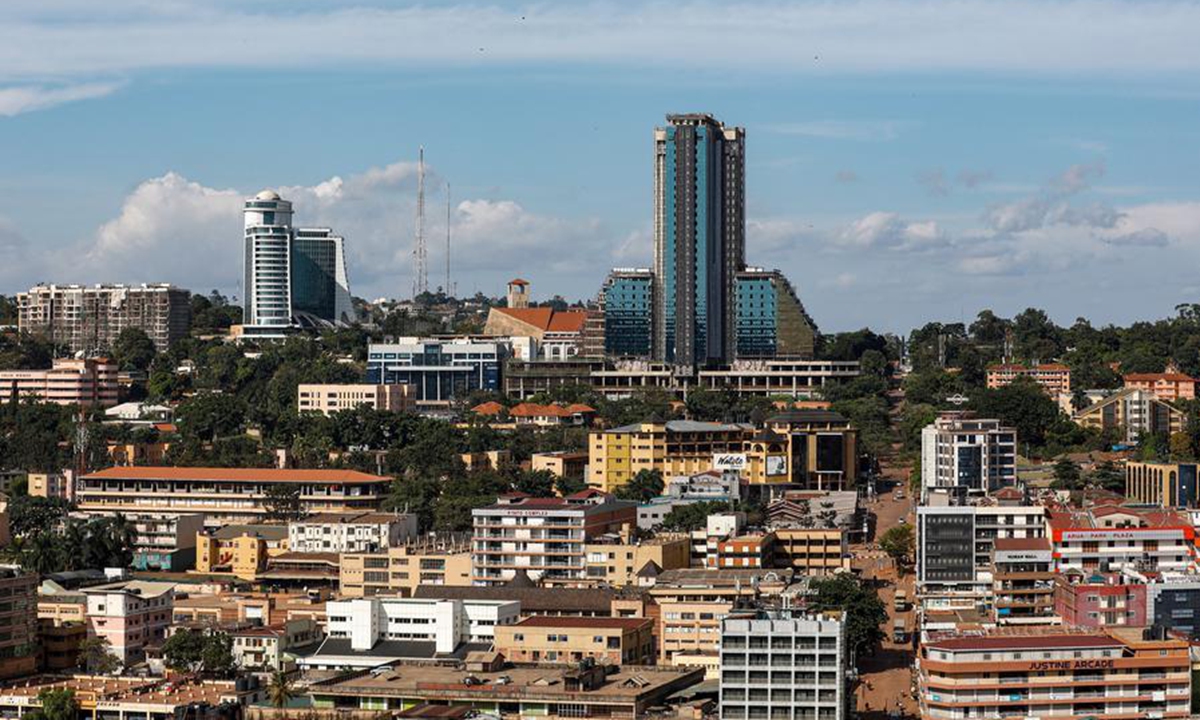 According to Taiwan regional media outlet United Daily News (UDN) on Saturday, a Taiwan resident holding a valid Ugandan work permit had his so-called "passport" confiscated by Ugandan immigration officials on August 3 after arriving at Entebbe International Airport (EBB) on a domestic flight. The officials cited a "new policy" but have yet to return the "passport." In a separate but similar incident, another Taiwan regional resident was also denied entry by Ugandan immigration officials at EBB and deported on the same flight, according to UDN. The two incidents occurred at the same airport within a short period of time, with the authorities' actions escalating from the confiscation of travel documents to outright denial of entry and deportation, a travel agency was quoted by the report as saying. The developments suggest that the measures being taken by Ugandan authorities may go beyond isolated incidents and could represent a systematic pattern of enforcement targeting people from the region, with signs that the situation is "continuing to escalate," per the report by UDN. However, so-called Taiwan regional foreign affairs authorities stated that the relevant cases may be connected with the measure rolled out by the Taiwan region to temporarily suspend visa issuance to Ugandan nationals and bar their entry amid the worsening Ebola epidemic, according to Taiwan's local media CNA, adding it will keep negotiating with Uganda and offer support to impacted people. Prior to this incident, several African countries had already adjusted their wording and entry policies concerning Taiwan region. According to a previous UDN report in July, on the registration page for South Africa's Electronic Travel Authorization (ETA) system, Taiwan is listed as "Taiwan, China" in the dropdown menu for place of issue of travel documents. Similarly, the international dialing code +886 is marked "Taiwan, China" under the phone number section. That same month, the Moroccan Embassy in Japan suspended its Visa Confirmation Letter (VCL) review process for travelers from Taiwan region starting July 23, while the regional authorities stopped accepting visa applications from Moroccan nationals in retaliation, according to CNA. But some netizens from the island commented that they had "gotten used to this situation". One remarked, "It was Papua New Guinea a few days ago, and now Morocco again. Taiwan's foreign affairs department sure has an easier job these days." After the government of Papua New Guinea announced the closure of the "Taipei Economic Office in Papua New Guinea," Chinese Foreign Ministry spokesperson Lin Jian also said during a press conference on July 16 that China highly commends the decision and it demonstrates once again that upholding the one-China principle is where international public opinion trends and the arc of history bends. Earlier in April, three African countries, Seychelles, Mauritius, and Madagascar revoked flight permit to cross their countries without prior warnings before regional leader Lai Ching-te's planned trip to Eswatini. Zheng Jian, a professor at the Graduate Institute for Taiwan Studies at Xiamen University in East China's Fujian Province, told the Global Times that the Democratic Progressive Party (DPP) has pushed to internationalize the Taiwan question and expand "Taiwan independence" activities abroad, directly challenging the one-China principle widely upheld by the international community and provoking pushback. International community, including African countries, would not choose to support "Taiwan independence" in their diplomatic decisions, and the more the separatists seek international space, the narrower their room for maneuver will become, the expert noted. Against the backdrop of the one-China principle, attributing such entry restrictions solely to the Ebola-related policy would amount to misplaced wishful thinking, he said. In truth, DPP authorities should not ignore that all the setbacks Taiwan region faces internationally nowadays are brought about by "Taiwan independence" separatist activities, Zheng said. A spokesperson from Taiwan Affairs Office of the State Council, Zhang Han, said during a press conference on July 22 that facts have proven time and again that the one-China principle is a basic norm governing international relations and a universal consensus among the international community. "Upholding the one-China principle aligns with righteousness and represents the irresistible historical trend. A just cause gains wide support, whereas an unjust one garners little backing. The DPP authorities stubbornly adhere to their separatist 'Taiwan independence' stance. Acting against the tide of history, they will only encounter repeated setbacks internationally," Zhang added. 。 Current article:http://a7lyv2o.tourunbiaodubaicubangninan.shop/fvf/20260826/8452104.html Published on:12:42:33 |
